Minnesota Homes Today Local & National News

  • Home
  • About Us
  • Blog
  • Resources
    • Buyers Guide
    • Sellers Guide
    • Buyer Info
    • Seller Info
    • Closing Costs
    • Home Appraisal
    • Home Inspection
    • Loan Checklist
    • Loan Process
    • Loan Programs
  • Contact

Understanding Your Debt-to-Income Ratio: What It Means

April 12, 2022 by Bob Elliot

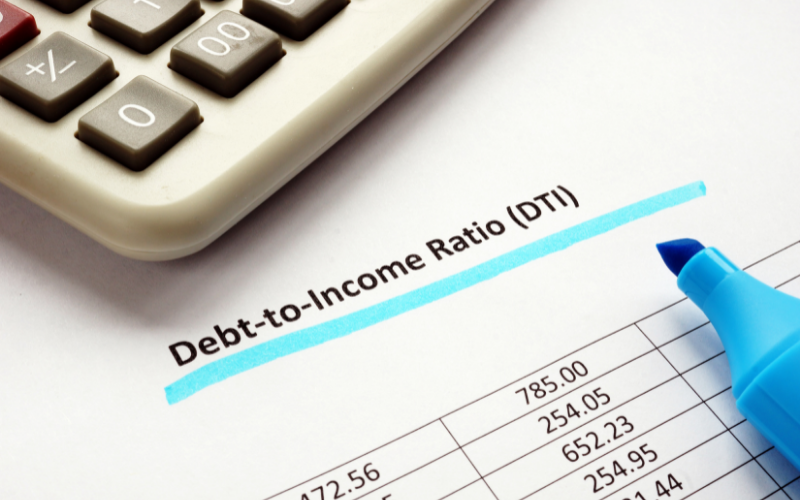
Understanding Your Debt To Income Ratio: What It MeansIf you are looking for a home, you might need to finance it using a lender, such as a bank or a credit union. There are a number of factors that will influence whether your mortgage application is approved. Then, these same factors will play a role in the terms the lender might offer you. One of the most important factors is called the debt-to-income ratio, or DTI. It is important to understand how this will impact your mortgage application.

What Is A Debt To Income Ratio?

Your DTI is important to the lender because this allows the lender to figure out the likelihood of you paying your mortgage on time. The less debt you have, the more financial stability you have to pay a potential mortgage.

To calculate your debt to income ratio, you need to calculate all the bills you have for the upcoming month. For example, if you have rent and a car payment, you add these numbers together. Then, you divide this number by your gross monthly income. If your rent is $900 and your car payment is $200, your total debt is $1100. Then, if you earn $3300, divide $1100 by $3300. This is about 33 percent.

Student Loan Debt Is A Driving Factor

With many members of the younger generation getting ready to purchase a house, it is important to understand the impact of student loan payments. Because a lot of potential home borrowers have student loans to pay back, their debt-to-income ratios will be significantly higher. This could make it harder for younger borrowers to get qualified for a mortgage, particularly one with favorable terms.

How To Improve Your Mortgage Application

Before you apply for a home loan, you should try to improve your debt to income ratio by paying down your existing bills. For example, if you have credit card debt, this will be included in your debt to income ratio. Try to pay this off before you apply for a mortgage. You should try to pay down your student loans as much as possible before applying for a mortgage as well. The less debt you carry, the more likely your mortgage application will be approved.

Filed Under: Mortgage Tagged With: Debt-to-Income, mortgage, Mortgage Payment

Using Your Tax Refund To Achieve Your Homeownership Goals This Year

April 11, 2022 by Bob Elliot Leave a Comment

Using Your Tax Refund To Achieve Your Homeownership Goals This Year | MyKCM

If you’re buying or selling a home this year, you’re likely saving up for a variety of expenses. For buyers, that might include things like your down payment and closing costs. And for sellers, you’re probably working on a bit of spring cleaning and maintenance to spruce up your house before you list it.

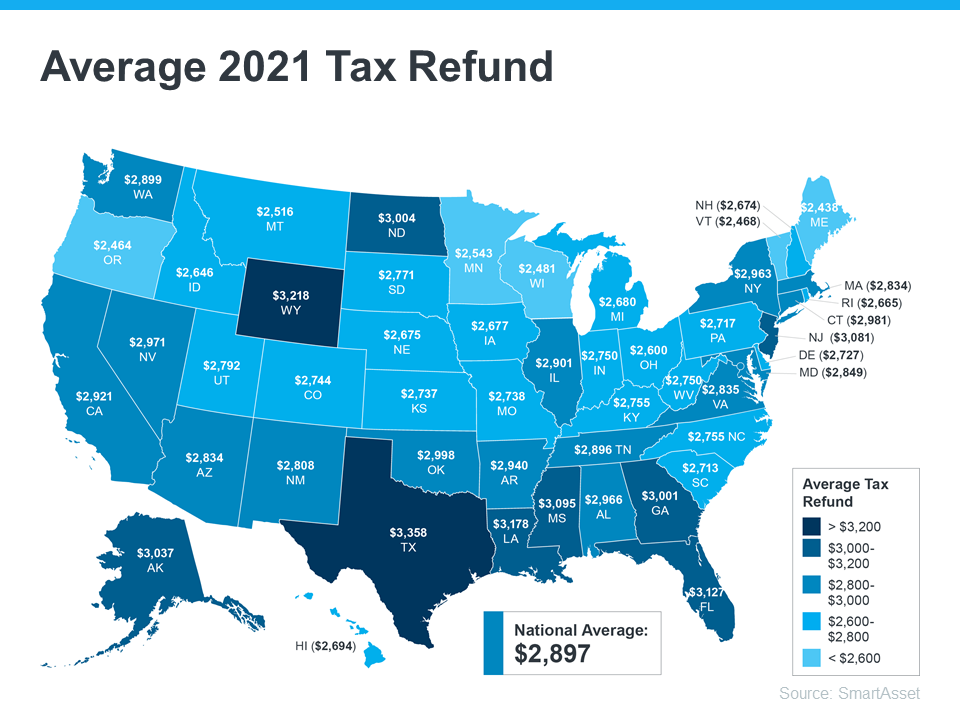
Either way, any money you get back from your taxes can help you achieve your goals. Using a tax refund is a common tactic for buyers and sellers. SmartAsset estimates the average American will receive a $2,897 tax refund this year. The map below provides a more detailed estimate by state:

Using Your Tax Refund To Achieve Your Homeownership Goals This Year | MyKCM

If you’re getting a refund this year, here are a few tips to help with your home purchase or sale this season.

How Buyers Can Use Their Tax Refund

According to American Financing, there are multiple ways your refund check can help you as a homebuyer. A few include:

  • Growing your down payment fund – If you haven’t started saving for your down payment, let your tax refund kick off the process. And if you have a fund already, the money you get back could put you closer to your goal.
  • Paying for your home inspection – Your home inspection can save you a lot of headaches down the road by helping you determine the condition of the house. As a buyer, you’ll typically be responsible for paying for your inspection, and it’s definitely worth the investment.
  • Saving for closing costs – Closing costs are additional expenses you’ll need to pay once it’s time to close. They average anywhere between 2-5% of the purchase price of your home.

This list is a great start, but it isn’t exhaustive of all the costs you may encounter as you set out on your homebuying journey. The best way to prepare is to work with a trusted real estate professional to make sure you understand what’s to come in the process.

How Sellers Can Use Their Tax Refund

If you own a home and are planning to sell this spring, your tax refund can help you make sure your home is ready to list. Here are a few ways current homeowners can put their tax refund to good use:

  • Making small upgrades – NerdWallet provides a list of great ways to use your tax refund, including tackling small projects or boosting your curb appeal to help your home stand out.
  • Making repairs – If there’s anything in your house that needs to be fixed, American Financing notes that completing repairs is another great use of that money.
  • Buying your next home – Whether you’re selling to move up or downsize, you can use your tax refund to help pay for any costs on the purchase of your next home.

Of course, it’s important to talk with your trusted real estate advisor before taking on any projects. They’ll make sure you can focus on areas that’ll help you receive the best possible price when you sell.

Bottom Line

Funding your home purchase or sale can feel like a daunting task, but it doesn’t have to be. Your tax refund can help you reach your goals. Let’s connect to discuss how you can start on your journey.

Filed Under: Home Buyer Tips Tagged With: Home Buyer, Home Buying, Homeownership, Tax Refund

What’s Ahead for Mortgage Rates This Week – April 11, 2022

April 11, 2022 by Bob Elliot Leave a Comment

What's Ahead For Mortgage Rates This Week - April 11, 2022Last week’s economic news included remarks given by Federal Reserve Board Governor Lael Brainard and the release of the minutes of the most recent meeting of the Fed’s Federal Open Market Committee. Weekly readings on mortgage rates and jobless claims were also released.

Federal Reserve Leaders Prepared to Address Inflation

Lael Brainard, a Governor of the Federal Reserve Board, addressed the central bank’s concerns over rapidly rising inflation in her remarks made at a financial conference in Minneapolis, Minnesota. “Currently, inflation is much too high and is subject to upside risks. It is of paramount importance to get inflation down.” Ms. Brainard concluded “The Fed is prepared to take further action if inflation indicators and expectations indicate that such action is warranted.”

Ms. Brainard described the Fed’s strategy for controlling inflation as a series of interest rate increases and rapid reductions to the Fed’s balance sheet that may occur as soon as the Federal Open Market Committee meets in May.

Federal Open Market Committee Meeting Minutes Indicate Plan for Slowing Inflation

Minutes of the March meeting of the Fed’s Federal Open Market Committee outlined the Fed’s plans for controlling runaway inflation. The plan is not set in stone yet, but “many” FOMC members were on board with the proposals for reducing the Fed’s portfolio by $95 billion a month after three months and raising the Fed’s key interest rate by 0.25 percent during future FOMC meetings. Committee members originally planned to raise the Fed’s interest rate by 0.50 percent at each meeting but reduced proposed rate hikes to 0.25 percent due to the potential impact of the war in Ukraine.

Mortgage Rates Rise, Jobless Claims Data Mixed

Freddie Mac reported higher mortgage rates last week as the average rate for 30-year fixed-rate mortgages rose by five basis points to 4.72 percent; the average rate for 15-year fixed-rate mortgages rose by eight basis points to 3.91 percent. Rates for 5/1 adjustable-rate mortgages rose by six basis points and averaged 3.56 percent. Discount points held steady and averaged 0.80 percent for fixed-rate mortgages and 0.30 percent for 5/1 adjustable-rate mortgages.

Fewer new jobless claims were filed last week than in the prior week with 166.000 new claims filed as compared to 171,000 initial claims filed in the previous week. Continuing jobless claims inched up with 1.52 million ongoing jobless claims filed as compared to the previous week’s reading of 1.51 million continuing claims filed.

What’s Ahead

This week’s scheduled economic news includes multiple readings on monthly and year-over-year inflation and the University of Michigan’s consumer sentiment index. Weekly readings on mortgage rates and jobless claims will also be published.

Filed Under: Financial Reports Tagged With: Financial Report, Jobless Claims, mortgage rates

  • « Previous Page
  • 1
  • …
  • 177
  • 178
  • 179
  • 180
  • 181
  • …
  • 1133
  • Next Page »

Connect with Me!

Let’s Keep In Touch!

  • This field is for validation purposes and should be left unchanged.

Quick Links

  • About Me
  • Accessibility Statement
  • Blog
  • Contact

Looking For Something?

Categories

Copyright © 2025 · Powered by MySMARTblog

Copyright © 2025 · Genesis Sample Theme on Genesis Framework · WordPress · Log in