
Minnesota Homes Today Local & National News

  • Home
  • About Us
  • Blog
  • Resources
    • Buyers Guide
    • Sellers Guide
    • Buyer Info
    • Seller Info
    • Closing Costs
    • Home Appraisal
    • Home Inspection
    • Loan Checklist
    • Loan Process
    • Loan Programs
  • Contact

Rebuilding Costs: Rethinking How Much Homeowners Insurance You Really Need

March 30, 2023 by Bob Elliot

Rebuilding Costs Rethinking How Much Homeowners Insurance You Really NeedBuying a home comes with numerous financial planning obligations. It’s far from a turn-key operation and one of the significant challenges involves developing a working knowledge about things often outside your area of expertise.

For example, working as an educator, police officer, investment banker or office staffer does not necessarily make you an expert about home repairs or insurance coverage. Yet, the average homeowner is tasked with carrying a certain level of homeowners insurance coverage without a strong working knowledge.

Many homeowners just purchase enough insurance to cover the purchase price or take the advice of others. Both of those methods could prove wildly deficient.

Rethinking Total Replacement Costs

A distinct difference exists between a home’s purchase price, assessed value and total replacement costs. Let that idea sink in a minute. What you paid for your home and it’s assessed value have zero to do with what it would cost to rebuild in the event of a total loss!

If you based your homeowners coverage on purchase price or estimated value, the word that comes to mind is “Yikes.” Here’s why.

Construction costs are based on prevailing market prices that include building materials and labor costs. These vary from region to region and can pique do to materials shortages and shifting prevailing wages. National home-building averages run anywhere from $117 to $125 per square foot. But, even as you read this article, that could change.

Beyond the fundamentals of calculating home construction costs on a square-foot basis, consider that rebuilding your home means that some type of catastrophe occurred. Whether that was a hurricane, tornado, flooding, fire or another disaster, there will likely be cleanup costs.

Before starting new construction, the damaged property will likely need to be razed and damaged materials removed. That comes at a cost.

Building permits and licenses will come at an additional cost. An architectural blueprint and design may need to be secured and that also comes at a cost. The permitting process can be challenging and that could result in you having to rent a temporary residence while your home is rebuilt. Obviously, there are plenty of unforeseen expenses.

Specialty Building Costs

Although average building costs per square foot are a viable standard measure, many homes enjoy specialty items.

Consider that you own a home built decades ago. The high-quality building materials used in construction may be considered specialty items today. They may inevitably be far more expensive than common building materials. If you want the home fully restored, that could cost more than the estimated average.

Accents such as rounded archways or plank-board floors are also more expensive to replace than many average materials. Those are all considerations that need to be tallied when insuring a home.

How To Recalculate Homeowners Insurance

Take the time to calculate the square footage of your home against average construction costs in your area. Factor in specialty items, permitting, razing and other potential hidden costs. Add 10-20 percent. According to some insurance experts, the average home is underinsured by upwards of 22 percent. After the carrier has paid out the coverage limit, overages could become out-of-pocket expenses.

Don’t hesitate to consult with a reputable home builder or insurance expert. Full coverage means accurately accounting for all of the rebuilding costs.

Contact your trusted mortgage professional to inquire about current rates for home construction loans, referrals to an insurance agent and more.

Filed Under: Mortgage Tagged With: Homeowners Insurance, mortgage, Rebuilding

5 Tips for Crafting a Counter-offer That Doesn’t Scare Away a Potential Home Buyer

March 29, 2023 by Bob Elliot

5 Tips for Crafting a Counter-offer That Doesn't Scare Away a Potential Home BuyerIf you’ve recently put your home up for sale, one of the most exciting parts of the selling process is getting an offer. However, all is not said and done once you’ve received an offer, as you’ll probably want to negotiate a better price. If you’re wondering how you can counter without losing a potential buyer, here are some tips when the time comes to negotiate.
Lower Your Price (A Little)

As a seller, it’s important to believe in the price you’ve put your home on the market for, but lowering your asking price after getting an offer will tell the potential buyer that you’re flexible. While you may not want to compromise too much, you’ll have to move a bit to keep them interested.

Pay For Closing Costs

There are so many costs involved in home ownership that many people are tired of all the associated fees of buying a home by the time it comes to closing. Instead of budging on your price, offering to pay for the closing costs can serve as a significant financial benefit for many buyers.

Hold Off On Offers

It can be a risky strategy, but choosing a specific day to consider offers can create a healthy competition for your home, and may stimulate interest without losing potential buyers. While you’ll want to be careful how you navigate this, it can work out well when it comes to bumping up the offers.

Provide An Expiration Date

Most counter-offers come with a timeframe that will allow those interested to accept the deal; however, consider adjusting this period to a timeframe that will work better for you. While you shouldn’t wait too long, a period of more than one day will tell the potential buyer that you want your home to be the right choice for them.

Be Reliable And Responsive

For an interested homebuyer, there’s nothing worse than having a home-seller that is not responsive to their offer. Instead of sitting on an offer too long, ensure you’re letting interested parties know that you’re considering their offer and will get back to them as soon as you’ve made a decision.

The art of negotiating can be complicated when it comes to selling your home, but by being responsive and showing flexibility, you may be able to get the offer you’re looking for.

Filed Under: Home Seller Tips Tagged With: Home Seller Tips, Negotiations, Selling A Home

Get Ready: The Best Time To List Your House Is Almost Here

March 27, 2023 by Bob Elliot Leave a Comment


If you’re thinking about selling this spring, it’s time to get moving – the best week to list your house is fast approaching.

Experts at realtor.com looked at seasonal trends from recent years (excluding 2020 as an uncharacteristic year due to the onset of the pandemic) and determined the ideal week to list a house this year:

“Home sellers on the fence waiting for that perfect moment to sell should start preparations, because the best time to list a home in 2023 is approaching quickly. The week of April 16-22 is expected to have the ideal balance of housing market conditions that favor home sellers, more so than any other week in the year.”

If you’ve been waiting for the best time to sell, this is your chance. But remember, before you put your house on the market, you’ve got to get it ready. And if you haven’t started that process yet, you’ll need to move quickly. Here’s what you should keep in mind.

Work with an Agent To Determine Which Updates To Make

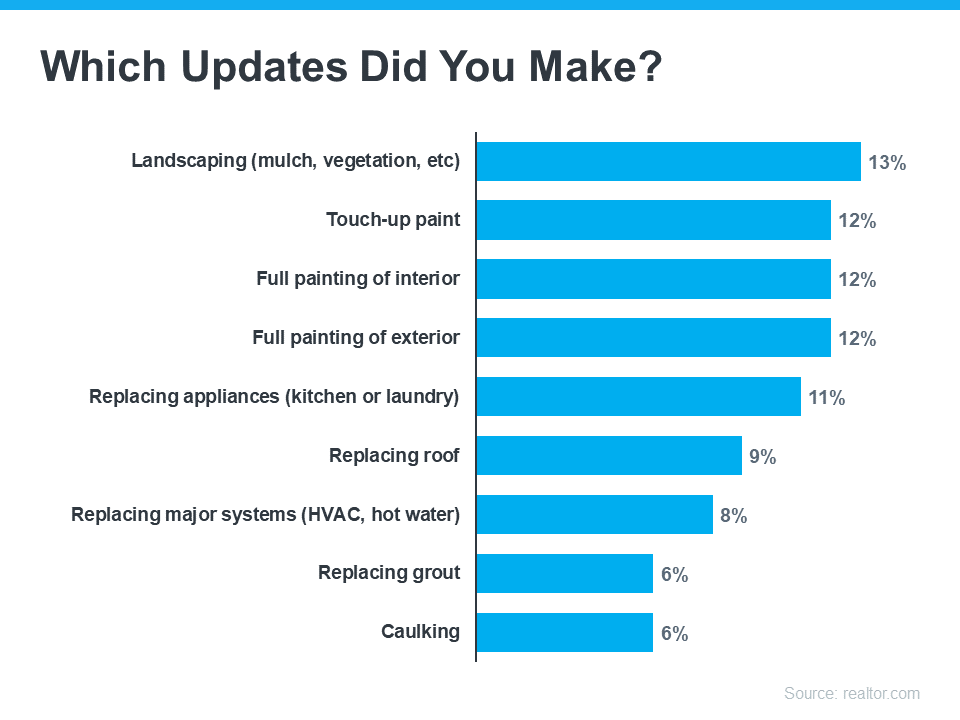
Start by prioritizing which updates you’ll make. In February, realtor.com asked more than 1,200 recent or potential home sellers what updates they ended up making to their house before listing it (see graph below):

As you can see, the most common answers included landscaping and painting. Work with a trusted real estate agent to determine what projects make the most sense for your goals and local market.

If Possible, Plan To Have Your House Staged

Once you’ve made any necessary repairs and updates to your house, consider having it staged. According to the National Association of Realtors (NAR), 82% of buyers’ agents said staging a home made it easier for a buyer to visualize the property as a future home. Additionally, almost half of buyers’ agents said home staging had an effect on most buyers’ view of the home in general. Homes that are staged typically sell faster and for a higher price because they help potential buyers more easily picture their new life in the house.

Bottom Line

Are you ready to sell this spring? Let’s connect to plan your next steps. You can start by making a checklist of what you think your house needs to get ready. Then, we can work together to prioritize your list and move forward together.

Filed Under: Home Selling Tips Tagged With: home sellers, Home Selling Tips

  • « Previous Page
  • 1
  • …
  • 59
  • 60
  • 61
  • 62
  • 63
  • …
  • 1133
  • Next Page »

Connect with Me!

Let’s Keep In Touch!

  • This field is for validation purposes and should be left unchanged.

Quick Links

  • About Me
  • Accessibility Statement
  • Blog
  • Contact

Looking For Something?

Categories

Copyright © 2025 · Powered by MySMARTblog

Copyright © 2025 · Genesis Sample Theme on Genesis Framework · WordPress · Log in