Minnesota Homes Today Local & National News

  • Home
  • About Us
  • Blog
  • Resources
    • Buyers Guide
    • Sellers Guide
    • Buyer Info
    • Seller Info
    • Closing Costs
    • Home Appraisal
    • Home Inspection
    • Loan Checklist
    • Loan Process
    • Loan Programs
  • Contact

Why Today’s Housing Market Isn’t Headed for a Crash

February 9, 2023 by Bob Elliot Leave a Comment

Why Today’s Housing Market Isn’t Headed for a Crash | MyKCM

67% of Americans say a housing market crash is imminent in the next three years. With all the talk in the media lately about shifts in the housing market, it makes sense why so many people feel this way. But there’s good news. Current data shows today’s market is nothing like it was before the housing crash in 2008.

Back Then, Mortgage Standards Were Less Strict

During the lead-up to the housing crisis, it was much easier to get a home loan than it is today. Banks were creating artificial demand by lowering lending standards and making it easy for just about anyone to qualify for a home loan or refinance an existing one.

As a result, lending institutions took on much greater risk in both the person and the mortgage products offered. That led to mass defaults, foreclosures, and falling prices. Today, things are different, and purchasers face much higher standards from mortgage companies.

The graph below uses data from the Mortgage Bankers Association (MBA) to help tell this story. In this index, the higher the number, the easier it is to get a mortgage. The lower the number, the harder it is.
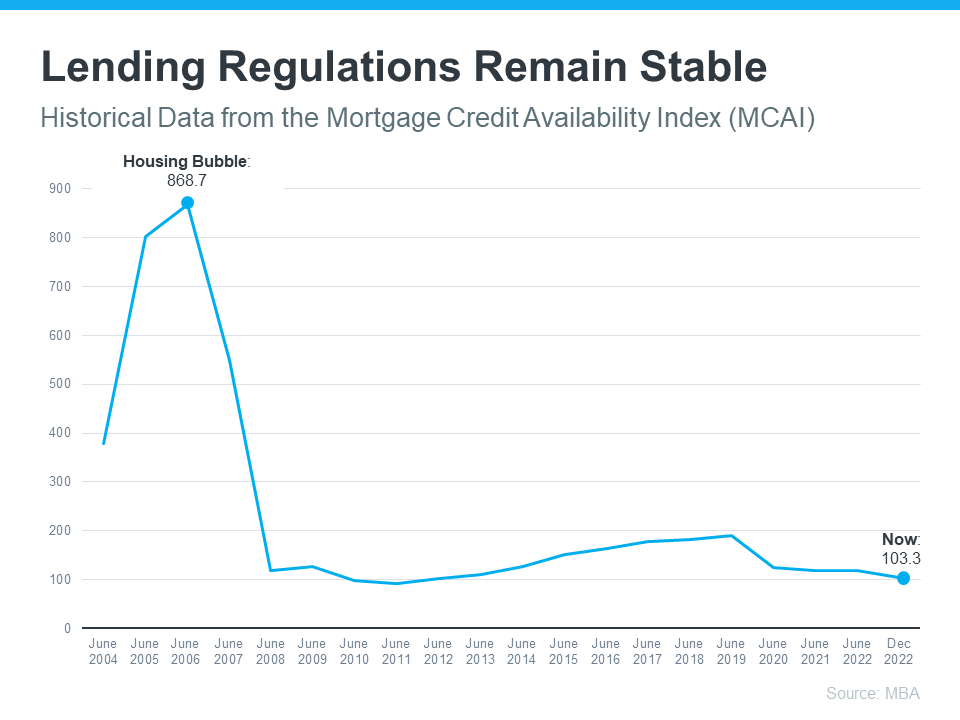
This graph also shows just how different things are today compared to the spike in credit availability leading up to the crash. Tighter lending standards have helped prevent a situation that could lead to a wave of foreclosures like the last time.

Foreclosure Volume Has Declined a Lot Since the Crash

Another difference is the number of homeowners that were facing foreclosure when the housing bubble burst. Foreclosure activity has been lower since the crash, largely because buyers today are more qualified and less likely to default on their loans. The graph below uses data from ATTOM to show the difference between last time and now:
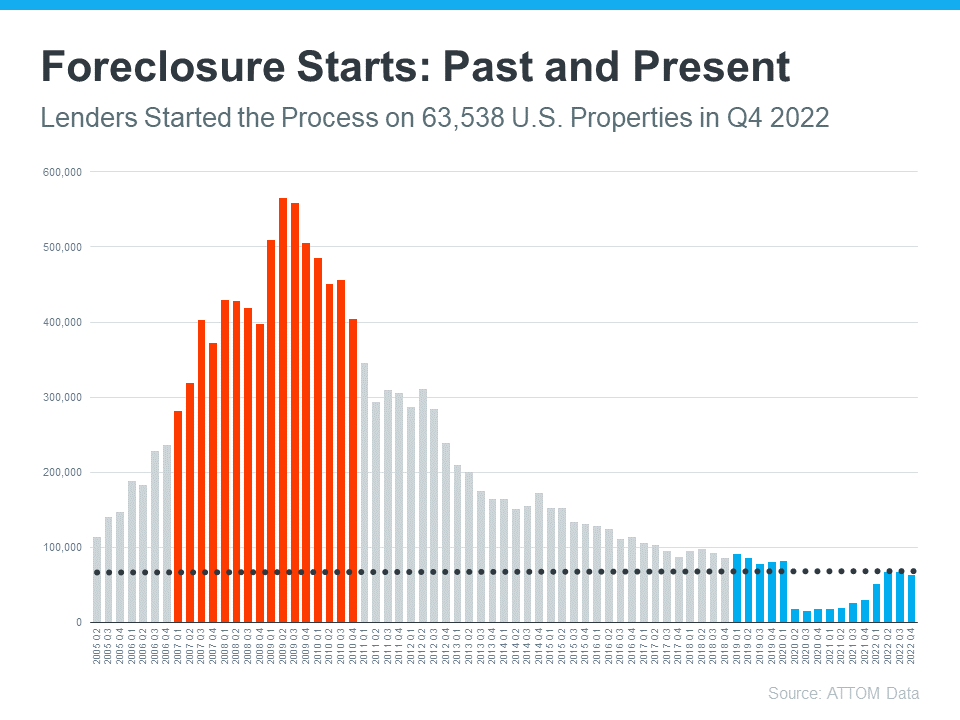
So even as foreclosures tick up, the total number is still very low. And on top of that, most experts don’t expect foreclosures to go up drastically like they did following the crash in 2008. Bill McBride, Founder of Calculated Risk, explains the impact a large increase in foreclosures had on home prices back then – and how that’s unlikely this time.

“The bottom line is there will be an increase in foreclosures over the next year (from record level lows), but there will not be a huge wave of distressed sales as happened following the housing bubble. The distressed sales during the housing bust led to cascading price declines, and that will not happen this time.”

The Supply of Homes for Sale Today Is More Limited

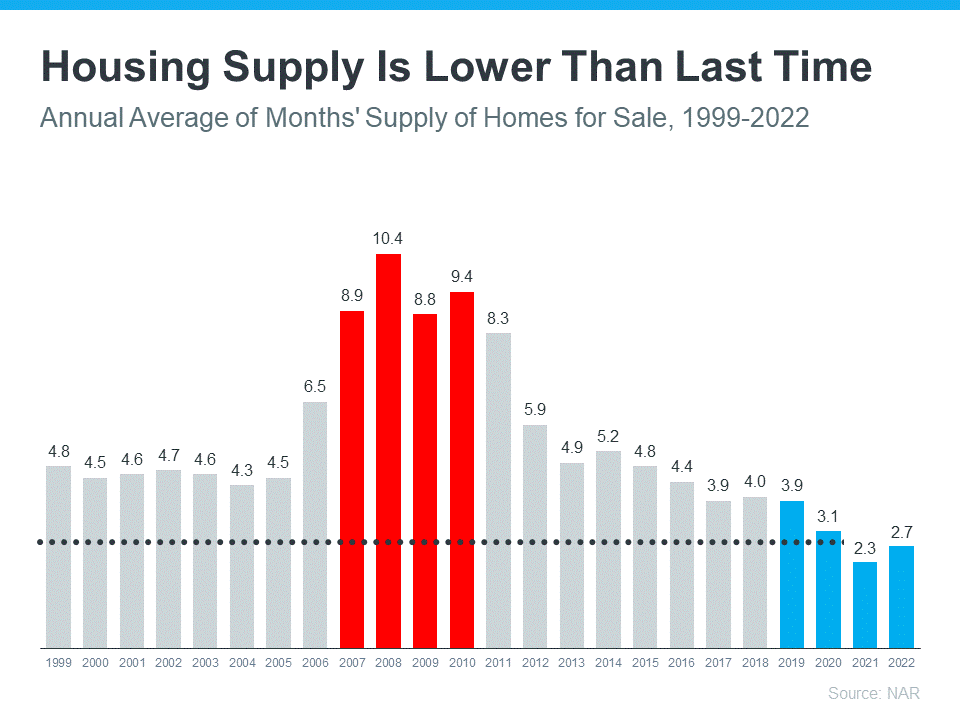
For historical context, there were too many homes for sale during the housing crisis (many of which were short sales and foreclosures), and that caused prices to fall dramatically. Supply has increased since the start of this year, but there’s still a shortage of inventory available overall, primarily due to years of underbuilding homes.

The graph below uses data from the National Association of Realtors (NAR) to show how the months’ supply of homes available now compares to the crash. Today, unsold inventory sits at just 2.7-months’ supply at the current sales pace, which is significantly lower than the last time. There just isn’t enough inventory on the market for home prices to come crashing down like they did last time, even though some overheated markets may experience slight declines.
Bottom Line

If recent headlines have you worried, we’re headed for another housing crash, the data above should help ease those fears. Expert insights and the most current data clearly show that today’s market is nothing like it was last time.

Filed Under: Housing Market Tagged With: Affordability, Housing Market, mortgage

Number of Homes for Sale Up from Last Year, but Below Pre-Pandemic Years

February 9, 2023 by Bob Elliot Leave a Comment

Number of Homes for Sale Up from Last Year, but Below Pre-Pandemic Years | MyKCM

The biggest challenge in the housing market right now, and likely for years to come, is how few homes there are for sale compared to the number of people who want to buy. That’s why, if you’re thinking about selling your house, this is a great time to do so. Your house would be welcome in a market that has fewer homes for sale than it did in the years leading up to the pandemic.

According to the latest Monthly Housing Market Trends Report from realtor.com:

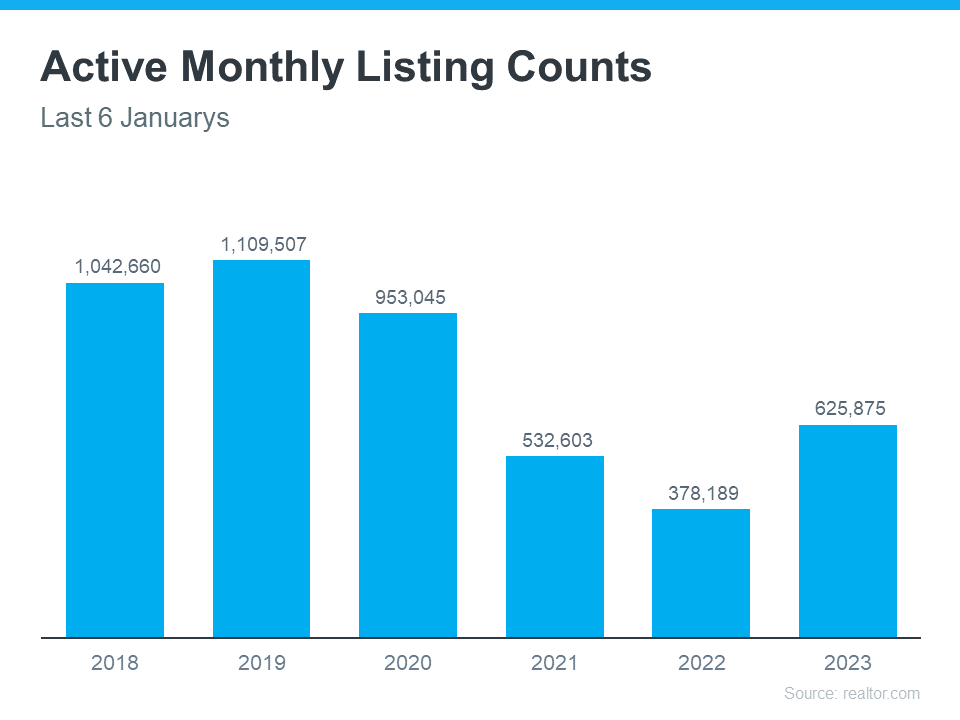
“There were 65.5% more homes for sale in January compared to the same time in 2022. This means that there were 248,000 more homes available to buy this past month compared to one year ago. While the number of homes for sale is increasing, it is still 43.2% lower than it was before the pandemic in 2017 to 2019. This means that there are still fewer homes available to buy on a typical day than there were a few years ago.”

The graph below shows how today’s inventory of homes for sale compares to recent years:

What Does This Mean for You?

Fewer homes for sale means buyers have fewer choices than they did prior to the pandemic—and that frustration is leading some to give up on the homebuying process altogether. But with mortgage rates sitting lower than they were at the peak last fall, more buyers are willing to come back into the process—they just need to find homes to buy. This is welcome activity for the spring market, especially if you’re thinking of selling your house.

With a renewed interest in buying a home for many, the New York Times (NYT) reports:

“Home buyers are edging back into the market after being sidelined last year . . .”

So, if you want to take advantage of a sweet spot in the market, this spring could be your shot.

Bottom Line

The housing market needs more homes for sale to meet the demand of today’s buyers. If you’ve thought about selling, now’s the time for us to connect and get ready for you to make a move this spring.

Filed Under: HOme Sales Tagged With: Home Prices, Home Sales, inventory

What Is an Assumable Mortgage Loan: What You Need to Know.

February 9, 2023 by Bob Elliot

What Is an Assumable Mortgage Loan: What You Need To KnowEverything has its benefits and drawbacks, and that includes mortgage loans. There are plenty of options available, and you need to find the best one to meet your needs. You have probably heard about conventional mortgages, FHA loans, and even VA loans. On the other hand, have you heard about assumable mortgages? What do you need to know about this option, and how do you know if it is right for you?

An Overview of an Assumable Mortgage

So, what is an assumable mortgage loan? This means that the buyer is responsible for taking over the mortgage obligations of the seller. One of the biggest advantages of this is that the buyer can use the seller’s interest rate and terms. For example, if you have noticed that interest rates have gone up significantly between now and when the seller took out his or her mortgage, you might decide to take on the seller’s interest rate instead of getting your own interest rate.

How An Assumable Home Loan Works

Now, it is time to take a closer look at how this works. Even though you might want the interest rate that the seller has, you still need to compensate the seller for the equity that he or she has built up. For example, the loan may only have a balance of $200,000, but the seller has already put in $100,000 of equity. As a result, you will either have to take out a second mortgage to cover the $100,000, or you will have to pay the seller $100,000 in cash. Even though you might have to take out a second mortgage for the remainder of the balance, the rest of the mortgage will still have the original interest rate, which could be lower.

Are All Loans Assumable?

Not all loans are assumable; however, there are some examples of loans that are. For example, FHA loans, VA loans, and USDA loans are assumable. If you want to assume a USDA loan, you have to meet the qualifications to take out a USDA loan. VA loans are only available to veterans, but non-veterans are allowed to assume VA loans, which could help them save a significant amount of money.

Filed Under: Mortgage Tagged With: Assumable Loans, mortgage, mortgage rates

  • « Previous Page
  • 1
  • …
  • 75
  • 76
  • 77
  • 78
  • 79
  • …
  • 1133
  • Next Page »

Connect with Me!

Let’s Keep In Touch!

  • This field is for validation purposes and should be left unchanged.

Quick Links

  • About Me
  • Accessibility Statement
  • Blog
  • Contact

Looking For Something?

Categories

Copyright © 2025 · Powered by MySMARTblog

Copyright © 2025 · Genesis Sample Theme on Genesis Framework · WordPress · Log in