Minnesota Homes Today Local & National News

  • Home
  • About Us
  • Blog
  • Resources
    • Buyers Guide
    • Sellers Guide
    • Buyer Info
    • Seller Info
    • Closing Costs
    • Home Appraisal
    • Home Inspection
    • Loan Checklist
    • Loan Process
    • Loan Programs
  • Contact

Why You Shouldn’t Fear Today’s Foreclosure Headlines

January 25, 2023 by Bob Elliot Leave a Comment

Why You Shouldn’t Fear Today’s Foreclosure Headlines | MyKCM

If you’ve seen recent headlines about foreclosures surging in the housing market, you’re certainly not alone. There’s no doubt, the stories in the media can be pretty confusing right now. They may even make you think twice about buying a home for fear that prices could crash. The reality is, the data shows a foreclosure crisis is not where the market is headed, and understanding what that really means is mission critical if you want to know the truth about what’s happening today. Here’s a deeper look.

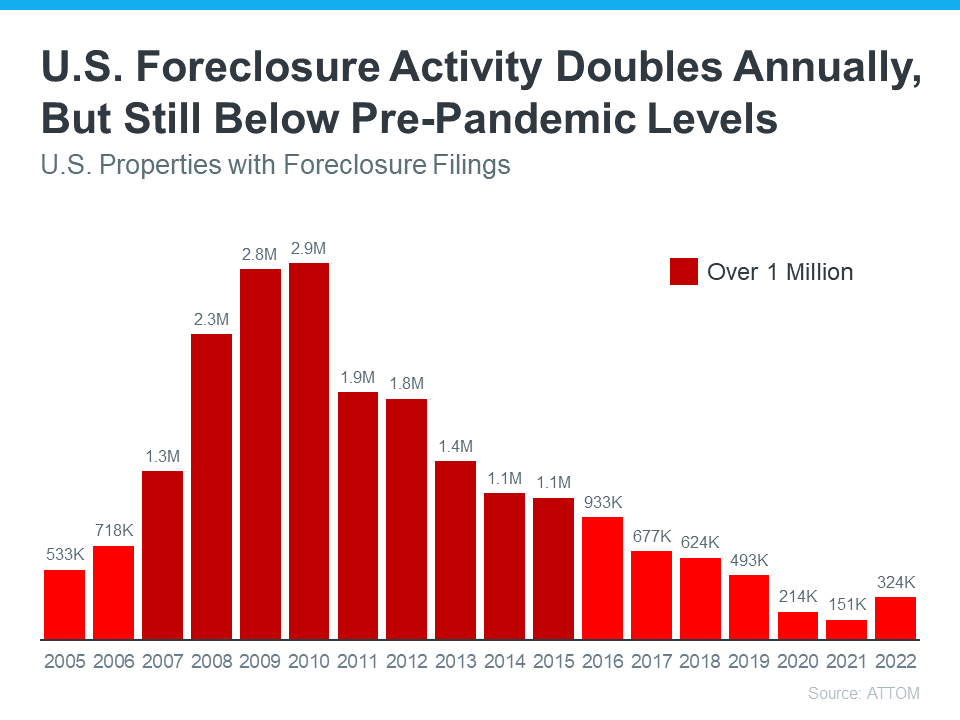
According to the Year-End 2022 U.S. Foreclosure Market Report from ATTOM, foreclosure filings are up 115% from 2021, but down 34% from 2019. As media headlines grab onto this 115% increase, it’s more important than ever to put that percentage into context.

While the number of foreclosure filings did more than double last year, we need to remember why that happened and how it compares to more normal, pre-pandemic years in the market. Thanks to the forbearance program and other relief options for homeowners, foreclosure filings were down to record-low levels in 2020 and 2021, so any increase last year is — no surprise — a jump up. Rick Sharga, Executive VP of Market Intelligence at ATTOM, notes:

“Eighteen months after the end of the government’s foreclosure moratorium, and with less than five percent of the 8.4 million borrowers who entered the CARES Act forbearance program remaining, foreclosure activity remains significantly lower than it was prior to the COVID-19 pandemic. It seems clear that government and mortgage industry efforts during the pandemic, coupled with a strong economy, have helped prevent millions of unnecessary foreclosures.”

Clearly, these options meant millions of homeowners could stay in their homes, allowing them to get back on their feet during a very challenging period. With home values rising at the same time, many homeowners who may have found themselves facing foreclosure under other circumstances were able to leverage their equity and sell their houses rather than face foreclosure, and that trend continues today.

And remember, as the graph below shows, foreclosures today are far below the record-high 2.9 million that were reported in 2010 when the housing market crashed.
Why You Shouldn’t Fear Today’s Foreclosure Headlines | MyKCM

So, while foreclosures are rising, keeping perspective in mind is key. As Bill McBride, Founder and Author of Calculated Risk, noted just last week:

“The bottom line is there will be an increase in foreclosures over the next year (from record low levels), but there will not be a huge wave of distressed sales as happened following the housing bubble. The distressed sales during the housing bust led to cascading price declines, and that will not happen this time.”

Bottom Line

Right now, putting the data into context is more important than ever. While the housing market is experiencing an expected rise in foreclosures, it’s nowhere near the crisis levels seen when the housing bubble burst, and that won’t lead to a crash in home prices.

Filed Under: Uncategorized Tagged With: Foreclosures, Home Buying, home sellers

The 3 Factors That Affect Home Affordability

January 25, 2023 by Bob Elliot Leave a Comment

The 3 Factors That Affect Home Affordability | MyKCM

If you’ve been following the housing market over the last couple of years, you’ve likely heard about growing affordability challenges. But according to experts, the key factors that determine housing affordability are projected to improve this year. Selma Hepp, Executive, Deputy Chief Economist at CoreLogic, shares:

“. . . with slowly improving affordability and a more optimistic economic outlook than previously believed, the housing market could show resilience in 2023.”

The three measures used to establish home affordability are home prices, mortgage rates, and wages. Here’s a closer look at each one.

1. Mortgage Rates

Mortgage rates shot up to over 7% last year, causing many buyers to put their plans on hold. But things are looking different today as rates are starting to come down. George Ratiu, Senior Economist at realtor.com, explains:

“Let’s celebrate some good news. . . . mortgage rates are down. With inflation showing a tangible slowdown, I do expect mortgage rates to follow suit in the months ahead.”

Even a small change in rates can impact your purchasing power. Nadia Evangelou, Director of Forecasting for the National Association of Realtors (NAR), gives this context:

“With a 6% rate instead of 7%, buyers pay about $2,700 less every year on their mortgage. As a result, owning a home becomes affordable to about 1.4 million more renters and 4.3 million more homeowners.”

If 7% rates paused your homebuying plans last year, this could be the opportunity you need to get back in the game. Be sure to work with a team of experts who know the latest on mortgage rates and can give you the best advice for the current market.

2. Home Prices

The second factor at play is home prices. Home prices have made headlines over the past few years because they skyrocketed during the pandemic. When discussing home prices in 2023, Lawrence Yun, Chief Economist at NAR, says:

“After a big boom over the past two years, there will essentially be no change nationally . . . Half of the country may experience small price gains, while the other half may see slight price declines.”

So, while prices will likely be flat this year in some markets, others could see small gains or slight declines. It all depends on your local area. For insight into what’s happening in your market and how prices are impacting affordability, reach out to a trusted real estate professional.

3. Wages

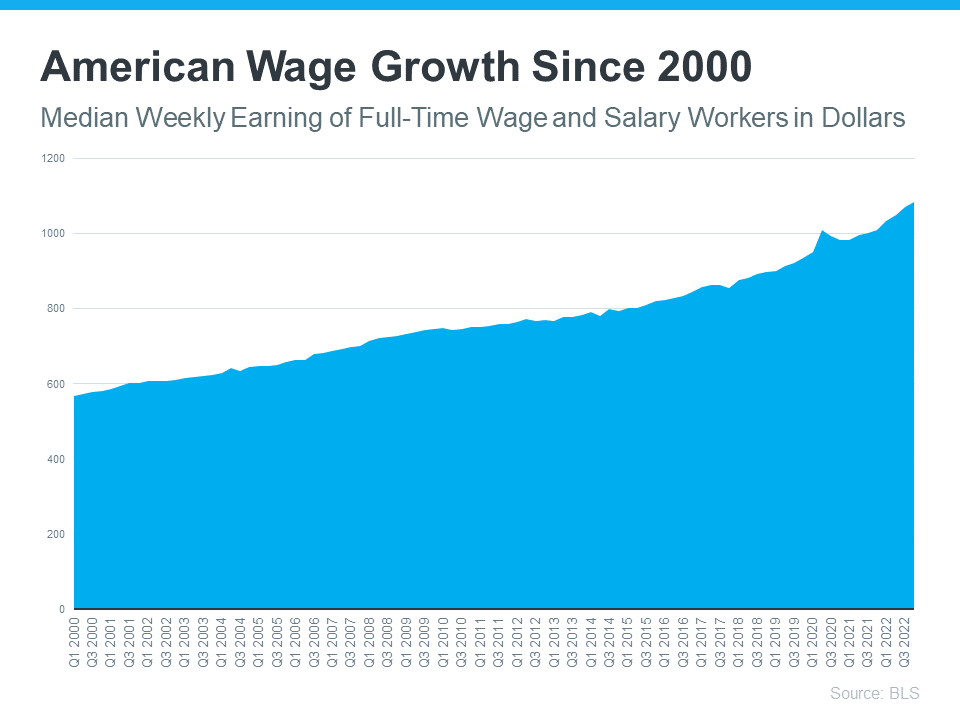
The final component in the affordability equation is wages. The graph below uses data from the Bureau of Labor Statistics (BLS) to show how wages have increased over time:

The 3 Factors That Affect Home Affordability | MyKCM

When you think about affordability, remember the full picture includes more than just mortgage rates and prices. Wages need to be factored in as well. Because wages have been rising, many buyers have renewed opportunity in the market.

While affordability hurdles are not completely going away this year, based on current trends and projections, 2023 should bring some sense of relief to homebuyers who have faced growing challenges. As Mike Fratantoni, Chief Economist at the Mortgage Bankers Association (MBA), says:

“Rates are expected to move lower for the year, and home price growth is expected to cool, both of which will help affordability challenges.”

Bottom Line

If you have questions, let’s connect. You’ll also want to make sure you have a trusted lender so you can explore your financing options. You may be closer to owning a home than you think.

Filed Under: Home Affordability Tagged With: Home Affordability, Home Buying

On Time, Every Time: How Being Late on Monthly Payments Can Affect Your Mortgage

January 25, 2023 by Bob Elliot

On Time, Every Time: How Being Late on Monthly Payments Can Affect Your MortgageAre you the type of person that struggles with remembering to pay their bills on time? You’re not alone. People across the country regularly submit late monthly payments, inflicting terrible damage to their credit. Let’s take a quick look at how paying your loan or other monthly payments late can have a negative impact on your mortgage.

Your Credit Score Is At Risk

As you already know, almost all banks, credit cards, mortgage companies and other lenders rely on your credit score to help assess the risk of lending money to you. Paying any of your payments late – even something as small as your mobile phone bill or a department store credit card – can result in negative marks showing up on your credit report. If you are late enough times or fail to repay the late payment in full, then your score will start to drop.

Refinancing Can Be Affected

If you already have a mortgage, then a lower credit score can be a problem when you try to refinance. The process of refinancing involves taking out a new mortgage, in which your lender will reassess your risk using your credit score as one of the indicators. If you have been making late payments, you might end up having to settle for a higher interest rate or you may even be declined for the new mortgage.

Making A Late Payment? Contact Your Lender

If you are caught in a bind and have to make a late payment, it is best to get a call in to your lender as soon as possible. First, there may be a grace period in which you can be a few days late without any penalty. If that little bit of breathing room is all you need to get caught up, you’re set. If not, you can let them know your circumstances and discuss what options you have.

It is essential to pay your monthly payments on time, even if it means making some small sacrifices in other areas. The better your credit score looks, the more opportunities you will have to make positive financial moves in the future.

Filed Under: Home Mortgage Tips Tagged With: Home Mortgage Tips, mortgage, Real Estate Tips

  • « Previous Page
  • 1
  • …
  • 80
  • 81
  • 82
  • 83
  • 84
  • …
  • 1133
  • Next Page »

Connect with Me!

Let’s Keep In Touch!

  • This field is for validation purposes and should be left unchanged.

Quick Links

  • About Me
  • Accessibility Statement
  • Blog
  • Contact

Looking For Something?

Categories

Copyright © 2025 · Powered by MySMARTblog

Copyright © 2025 · Genesis Sample Theme on Genesis Framework · WordPress · Log in