Minnesota Homes Today Local & National News

  • Home
  • About Us
  • Blog
  • Resources
    • Buyers Guide
    • Sellers Guide
    • Buyer Info
    • Seller Info
    • Closing Costs
    • Home Appraisal
    • Home Inspection
    • Loan Checklist
    • Loan Process
    • Loan Programs
  • Contact

The Luxury Market Is Attracting Buyers in 2021

February 10, 2021 by Bob Elliot Leave a Comment

The Luxury Market Is Attracting Buyers in 2021 | MyKCM

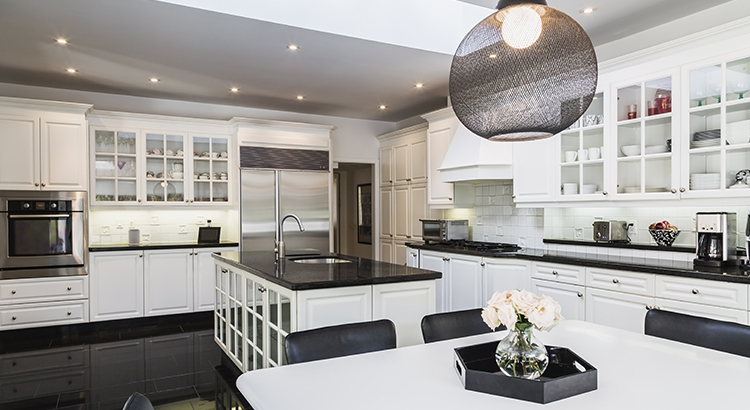
As more people continue to identify their changing needs this year, some are turning to the upscale housing sector for more space or finer features. In their most recent Luxury Market Report, the Institute for Luxury Home Marketing (ILHM) shares:

“In a snapshot of 2020, despite the devastating effects of the coronavirus pandemic, the luxury real estate market has seen one of its strongest years since 2008. In comparison to experts’ predictions in early 2020, it is remarkable how significant demands for property type, location, and amenity preferences have changed amid the pandemic.”

With more opportunities to work from home and a growing interest in having extra space for things like virtual school, working out, and cooking more meals, the desire to own a home that can meet these needs continues to increase. Additionally, record-low mortgage rates are creating opportunities for homebuyers to stretch their legs into higher price points or even expand their real estate portfolios. The ILHM report continues to say:

“Experts believe that the demand for exclusive residential properties outside the metropolitan areas will continue well into 2021; even with the introduction of vaccines, the pandemic is far from over.

For those who have moved to the suburbs and beyond, moving back to the city full time is unlikely while the work from home trend remains. Many of these affluent homeowners are now making their secondary properties their primary residences for the foreseeable future.”

If you’re interested in buying a home this year, it appears that some higher-priced markets may have more homes to choose from than those at lower price points. Javier Vivas, Director of Economic Research at realtor.com, notes:

“Interestingly, markets, where new supply is improving the fastest, tend to be higher priced than those that have yet to see improvement, suggesting sellers are more active in the more expensive markets.”

Bottom Line

If you’re hoping to buy the home of your dreams, this could be the year to achieve that goal. Let’s connect today to explore your possibilities.


Filed Under: Housing Market Insights Tagged With: luxury homes market

3 Reasons We’re Definitely Not in a Housing Bubble

February 10, 2021 by Bob Elliot Leave a Comment

3 Reasons We’re Definitely Not in a Housing Bubble | MyKCM

Home values appreciated by about ten percent in 2020, and they’re forecast to appreciate by about five percent this year. This has some voicing concern that we may be in another housing bubble like the one we experienced a little over a decade ago. Here are three reasons why this market is totally different.

1. This time, housing supply is extremely limited

The price of any market item is determined by supply and demand. If supply is high and demand is low, prices normally decrease. If supply is low and demand is high, prices naturally increase.

In real estate, supply and demand are measured in “months’ supply of inventory,” which is based on the number of current homes for sale compared to the number of buyers in the market. The normal months’ supply of inventory for the market is about 6 months. Anything above that defines a buyers’ market, indicating prices will soften. Anything below that defines a sellers’ market in which prices normally appreciate.

Between 2006 and 2008, the months’ supply of inventory increased from just over 5 months to 11 months. The months’ supply was over 7 months in twenty-seven of those thirty-six months, yet home values continued to rise.

Months’ inventory has been under 5 months for the last 3 years, under 4 for thirteen of the last fourteen months, under 3 for the last six months, and currently stands at 1.9 months – a historic low.

Remember, if supply is low and demand is high, prices naturally increase.

2. This time, housing demand is real

During the housing boom in the mid-2000s, there was what Robert Schiller, a fellow at the Yale School of Management’s International Center for Finance, called “irrational exuberance.” The definition of the term is, “unfounded market optimism that lacks a real foundation of fundamental valuation, but instead rests on psychological factors.” Without considering historic market trends, people got caught up in the frenzy and bought houses based on an unrealistic belief that housing values would continue to escalate.

The mortgage industry fed into this craziness by making mortgage money available to just about anyone, as shown in the Mortgage Credit Availability Index (MCAI) published by the Mortgage Bankers Association. The higher the index, the easier it is to get a mortgage; the lower the index, the more difficult it is to obtain one. Prior to the housing boom, the index stood just below 400. In 2006, the index hit an all-time high of over 868. Again, just about anyone could get a mortgage. Today, the index stands at 122.5, which is well below even the pre-boom level.

In the current real estate market, demand is real, not fabricated. Millennials, the largest generation in the country, have come of age to marry and have children, which are two major drivers for homeownership. The health crisis is also challenging every household to redefine the meaning of “home” and to re-evaluate whether their current home meets that new definition. This desire to own, coupled with historically low mortgage rates, makes purchasing a home today a strong, sound financial decision. Therefore, today’s demand is very real.

Remember, if supply is low and demand is high, prices naturally increase.

3. This time, households have plenty of equity

Again, during the housing boom, it wasn’t just purchasers who got caught up in the frenzy. Existing homeowners started using their homes like ATM machines. There was a wave of cash-out refinances, which enabled homeowners to leverage the equity in their homes. From 2005 through 2007, Americans pulled out $824 billion dollars in equity. That left many homeowners with little or no equity in their homes at a critical time. As prices began to drop, some homeowners found themselves in a negative equity situation where the mortgage was higher than the value of their home. Many defaulted on their payments, which led to an avalanche of foreclosures.

Today, the banks and the American people have shown they learned a valuable lesson from the housing crisis a little over a decade ago. Cash-out refinance volume over the last three years was less than a third of what it was compared to the 3 years leading up to the crash.

This conservative approach has created levels of equity never seen before. According to Census Bureau data, over 38% of owner-occupied housing units are owned ‘free and clear’ (without any mortgage). Also, ATTOM Data Solutions just released their fourth quarter 2020 U.S. Home Equity Report, which revealed:

“17.8 million residential properties in the United States were considered equity-rich, meaning that the combined estimated amount of loans secured by those properties was 50 percent or less of their estimated market value…The count of equity-rich properties in the fourth quarter of 2020 represented 30.2 percent, or about one in three, of the 59 million mortgaged homes in the United States.”

If we combine the 38% of homes that are owned free and clear with the 18.7% of all homes that have at least 50% equity (30.2% of the remaining 62% with a mortgage), we realize that 56.7% of all homes in this country have a minimum of 50% equity. That’s significantly better than the equity situation in 2008.

Bottom Line

This time, housing supply is at a historic low. Demand is real and rightly motivated. Even if there were to be a drop in prices, homeowners have enough equity to be able to weather a dip in home values. This is nothing like 2008. In fact, it’s the exact opposite.

Filed Under: Home Buyer Tagged With: Home Values, housing bubble

Buying a New Home? Follow These Three Tips to Ensure a Stress-Free Transaction

February 10, 2021 by Bob Elliot

Buying or Selling Your Home? Follow These Three Tips to Ensure a Stress-free Real Estate TransactionBuying real estate and or taking out a home loan is a significant milestone in life. Frequently, it means that a new phase is starting, whether it’s a new job, a new relationship, or moving to a new area. However, when the most basic steps are missed, this transition can be fraught with stress and disaster. To ensure a smooth transaction, home buyers should be sure to mind the following tips.

#1: Always Be Honest

Honesty and clear communication need to be a two-way street. Home buyers expect their mortgage professional to be honest with them, and likewise it is always necessary for a home buyer to be honest with their mortgage professional.

Hiding details or covering up potential problems by either party will only cause more issues when everything comes to light. When important information is withheld, it’s possible for delays to occur, costs to rise, or even for the deal to fall through.

It’s much better to disclose all necessary information upfront so the situation can be handled appropriately. An expert mortgage professional will be able to guide home buyers through any problems and issues to a workable solution.

#2: Hire A Professional Team

Buying real estate and taking out a mortgage is not an easy process, so it’s never a good idea to try to proceed without a professional who can be trusted.

Far too often, people let friends or family members represent them in real estate transactions. In these cases, it’s likely for feelings to be hurt, relationships to be damaged, and trust to be compromised.

Rather, it’s recommended for home buyers to use a real estate agent and mortgage professional they do not have a close personal relationship with. That way, they can stand confident that their agent or mortgage professional is looking out for their best interests, and nothing else.

#3: Understand The Market

Far too often, home buyers fail to understand the market and their finincial situation.

Failing to identify this crucial information will waste time for buyer and mortgage professional. However, this is where a real estate agent or mortgage professional comes in: he or she will know the market inside out and be able to offer valuable counsel for all financial situations.

Home buyers should call their mortgage professional if at any time they have questions about taking out a mortgage; this professional is the key to a smooth real estate purchase.

Filed Under: Home Buyer Tips Tagged With: Buying, Home Buyer Tips, mortgage tips

  • « Previous Page
  • 1
  • …
  • 331
  • 332
  • 333
  • 334
  • 335
  • …
  • 1133
  • Next Page »

Connect with Me!

Let’s Keep In Touch!

  • This field is for validation purposes and should be left unchanged.

Quick Links

  • About Me
  • Accessibility Statement
  • Blog
  • Contact

Looking For Something?

Categories

Copyright © 2026 · Powered by MySMARTblog

Copyright © 2026 · Genesis Sample Theme on Genesis Framework · WordPress · Log in