Why This Is Not Like 2008 Again

During the Great Recession, just over a decade ago, the financial systems the world depended on started to collapse. It created a panic that drove some large companies out of business (ex. Lehman Brothers) and many more into bankruptcy.
The financial crisis that accompanied the current pandemic caused hardship to certain industries and hurt many small businesses. However, it hasn’t rattled the world economy. It seems that a year later, things are slowly getting back to normal for many companies.
Why is there a drastic difference between 2008 and now?
In a post from RealtyTrac, they explain:
“We changed the rules. We told banks they needed more reserves and that they could no longer underwrite toxic mortgages. It turns out that regulation — properly done — can help us navigate financial minefields.”

Here are the results of that regulation, captured in a graph depicting the number of failed banks since 2007.
What was different this time?
The post mentioned above explains:
“In 2008 the government saw the foreclosure meltdown as a top-down problem and set aside $700 billion for banks under the Troubled Asset Relief Program (TARP). Not all of the $700 billion was used, but the important point is that the government did not act with equal fervor to help flailing homeowners, millions of whom lost their homes to foreclosures and short sales.
This time around the government forcefully moved to help ordinary citizens. Working from the bottom-up, an estimated $5.3 trillion went to the public in 2020 through such mechanisms as the Paycheck Protection Program (PPP), expanded unemployment benefits, tax incentives, and help for local governments. So far this year we have the $1.9 billion American Rescue Plan with millions of $1,400 checks as well as proposals to spend trillions more on infrastructure…Bank deposits increased by nearly $2 trillion during the past year and credit card debt fell.”
Bottom Line
Many have suffered over the past year. However, the economic toll of the current recession was nowhere near the scope of the Great Recession, and it won’t result in a housing crisis.
Photography Tricks To Watch Out For When Buying A Home Online
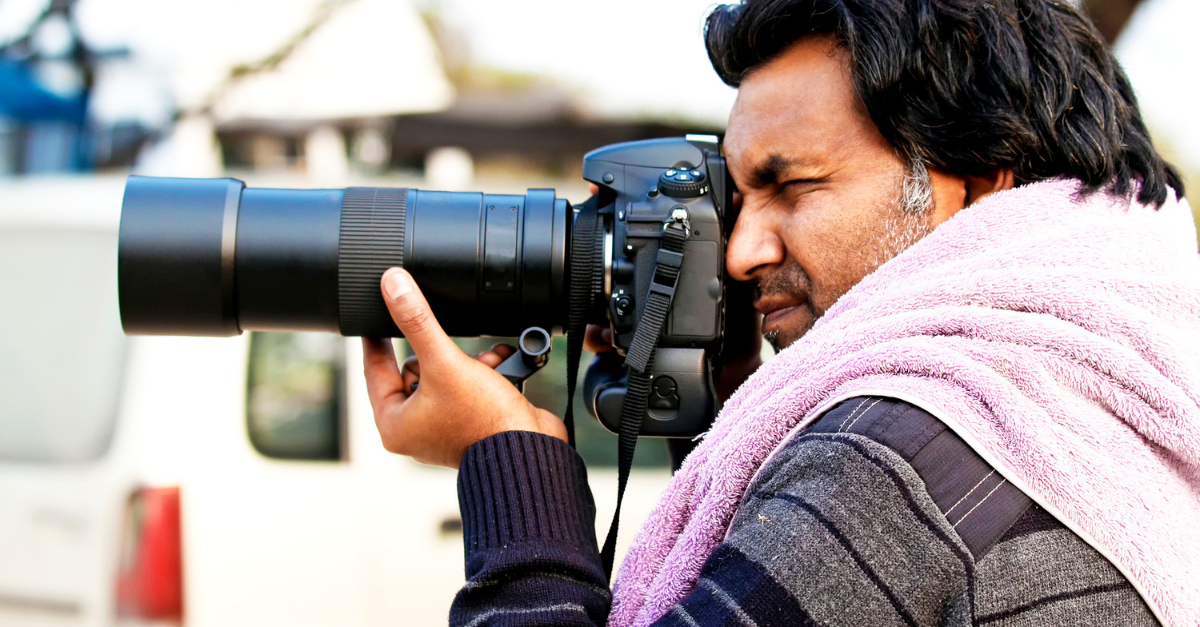 With COVID and social distancing keeping people apart, buying a home in person has become a real challenge. Digital tools and online presentations of homes for sale have ramped up in response, making it possible to see properties with both static images/photos and with “360 degree” views or interactive walkthroughs. However, these are not real-time images of the home itself. They are professionally-developed representations of a property, and a lot of software work goes into making those images marketing ready.
Photographic Tools of the Trade
If a listing has included images created by a professional photographer, he or she will have used a number of resources to produce what a consumer sees. First, the camera will be a high-grade, professional unit with enhanced features in it for different lighting aspects. It may be likely that 20 to 30 individual shots were taken and possibly merged to get the “right” image.
Once the raw image set is identified, the photographer will then use processing software to enhance the image. This includes features like further lighting changes, straightening of vertical and horizontal levels in the image, color saturation and vibrancy, and spot or mistake fixing. In short, the room or home in the image won’t be the actual, exact room seen in real time. Additional work can be applied on clouds and background, such as seen in external property photos, and mask layers can even be applied to add in elements that were never in the original photograph when snapped.
Spot-fixing is a frequently-used digital effect that hides blemishes otherwise visible in a photograph. It’s very easy to do, and the matching by the software blends the targeted image part with surrounding material, so the end result looks natural and unedited. This can cover up wall stains, dents or sagging, cracks, carpet blemishes and a lot more.
Videos Aren’t Much Better
Another typical photo-based display of homes tends to be video. Folks often believe videos are more accurate and better than photographs in judging a property. However, keep in mind there is an extensive set of tools for digital video editing available, and most film professionals know how to apply similar lighting, color, and changes to film as well as how to edit and present the best image versus cropping out and removing snippets of questionable coverage. The big problem with video is how much of it can be changed with multiple video shots streamed together to look like one view or one time period.
Photographs Hide Staging
Another big issue with newly-built homes as well as used homes for sale is staging. Photographers work with sales teams to stage and present a what-if view of a home for sale that can be very different from the actual product received once the escrow is completed. Unless you see the photographs in raw form, you really don’t know what you are buying without physically visiting the property.
Bottom line, try to avoid buying a home without seeing it in person. If you do need to purchase remotely, use a third party you can trust to obtain independent images that are not professionally altered, or you may be unhappily surprised with the difference between a listing’s marketing images and your actual new home.
- « Previous Page
- 1
- …
- 280
- 281
- 282
- 283
- 284
- …
- 1133
- Next Page »